Dating App Profile Tips: What Actually Gets You More Matches
Your photos matter more than you think—and you're probably bad at picking them. Here's what the research says about building a dating profile that works.
Here's something most dating advice won't tell you: what you say in your opening message barely matters compared to your profile.
That sounds harsh, but the research is pretty clear. A study from the University of Amsterdam analyzed thousands of dating app decisions and found that improving how attractive your photos appear has roughly ten times the impact of improving your bio. The researchers put it bluntly: if your profile picture and bio are both average, making your photo more attractive by one standard deviation jumps your matching rate from 25% to 43%. Polishing your bio by the same amount? A 2% bump.
This isn't about being born with better genes. It's about the photos you choose, how they're taken, and how you present yourself. And here's the thing—you're probably making worse choices than you realize.
You're Bad at Picking Your Own Photos (Science Says So)
This isn't an insult. It's a well-documented psychological phenomenon.
Researchers at the University of Sydney ran an experiment: they had people select their best profile photos from a set of 12 images of themselves, then had strangers do the same task. When independent viewers rated the photos, the ones chosen by strangers consistently made better impressions than the ones people chose for themselves.
The study's title says it all: "Choosing face: The curse of self in profile image selection."
Why does this happen? We don't see our own faces the way others do. We have emotional associations with certain photos—memories of that day, how we were feeling, what we think we look like. Strangers just see the image in front of them. And their judgment is closer to what your potential matches will experience.
Tip: The practical takeaway is simple: don't pick your own photos. Ask friends to choose for you—or better yet, ask someone who doesn't know you well. They'll often select images you'd never have picked yourself.
Testing Your Photos (Without Asking Friends to Lie to You)
Asking friends helps, but friends are often too polite—or they're not your target demographic. A 45-year-old coworker might not know what photos appeal to the 28-year-olds you're hoping to match with.
Several services let you test photos with real people before committing to them:
- Photofeeler — The most established option. Real humans rate your photos on traits like attractiveness and trustworthiness. Free if you vote on others' photos; paid for faster results.
- ProfilePolls — Similar concept, built specifically for dating profiles. Also lets you test prompts and bios.
- ROAST — Uses AI plus human review to analyze your full profile, not just individual photos. Paid service.
A word of caution: don't obsess over scores. These tools give you directional feedback, but the numbers are based on whoever happens to vote that day—scores can vary significantly for the same photo tested twice. Use them to identify obvious issues or compare two similar photos, not to chase a perfect 9.5.
Photos Are Processed First (And Sometimes Only)
If you've ever wondered whether people actually read your bio, the research has a sobering answer.
Eye-tracking studies on dating profiles show that people process photos and text as "two relatively isolated events." Photos get attention first, and they heavily influence whether someone bothers reading anything else.
OkCupid ran an even more dramatic experiment: they removed all photos from the platform for a day. Users fled in droves. The ones who stayed actually had better conversations—they responded faster, exchanged contact information sooner, spent more time chatting. But when photos came back, most of those "blind date" connections stopped talking.
The conclusion from OkCupid's co-founder? "The words on your dating profile matter very little compared with the photos."
This doesn't mean your bio is useless—we'll get to that. But it does mean photos are the gateway. If they don't work, nothing else matters.
What Actually Makes a Good Dating Photo
Here's where it gets useful. Researchers have actually studied what separates photos that work from photos that don't.
The Same Person Can Get Wildly Different Results
Research from Photofeeler, which has analyzed over a million dating photos, shows that different images of the same person can produce completely different impressions. We're not talking small variations—some photos score dramatically higher than others, even with identical subjects.
This means "attractiveness" in dating app photos isn't fixed. It's heavily influenced by the specific image: the lighting, the angle, the expression, the context.
What the Research Says Works
A neuromarketing study using brain scans and eye tracking tested how people respond to Tinder photos. They found several factors that consistently affected how attractive a photo appeared:
High contrast — Clear difference between light and dark parts of the image. Low-contrast, washed-out photos performed worse.
Low noise — Fewer distracting elements in the background. Busy, cluttered photos require more mental effort to process.
No other people — Group shots performed worse. The viewer's brain has to work harder to figure out who you are.
Clear face visibility — No sunglasses obscuring your eyes. Facial obstruction hurt scores.
Good composition — Neither too close nor too far. A clear view of your face and some context about who you are.
The researchers' "recipe for a perfect Tinder photo" came down to: high contrast, minimal distractions, solo shot, no sunglasses, and appropriate framing. Simple, but most photos violate at least one of these.
Multiple Photos Help
Research on profile "richness" found that profiles with more photos led to stronger dating intentions, more favorable assessments, and better perceptions of positive traits. Having multiple images lets people see different facets of who you are—and builds more confidence that you're a real person.
Most apps let you upload 6-9 photos. Use them. Show different contexts: a clear headshot, a full-body shot, you doing something you enjoy, you with friends (where it's clear which one is you), something that gives a sense of your personality.
What About Smiling?
This one's more complicated than the internet suggests.
OkCupid's famous 2010 analysis claimed men should look away from the camera and not smile. But when Photofeeler tried to replicate this in 2017, they couldn't reproduce the results. Their data suggested that whether you smile or not doesn't make a consistent difference—what matters more is that the expression looks natural and authentic.
The original OkCupid study had methodological issues: tiny sample sizes for some categories, an unusual metric, and data from a very specific subset of users in 2009. Trends may have changed, and the "don't smile" advice may have been overfit to a particular moment.
The better advice: use photos where you look natural and comfortable. Forced expressions—whether forced smiles or forced brooding—tend to read as inauthentic.
Your Bio Matters Less Than You Think (But Still Matters)
Let's be honest about the hierarchy: photos dominate. But once someone's interested enough to look closer, your bio can help or hurt.
Language Errors Are Surprisingly Costly
Eye-tracking research found that spelling and grammar errors in profiles negatively affect perceived attractiveness—even when photos are good. The effect is strongest for people whose photos are moderately attractive (neither stunning nor unattractive).
The likely reason: errors signal carelessness or low effort. When someone's on the fence about you, a sloppy bio can tip them toward "no."
This doesn't mean your bio needs to be Shakespeare. It means proofread it. Run it through a spell-checker. Have a friend read it.
Specific Beats Generic
OkCupid's messaging data showed that people who mentioned specific things from profiles got dramatically better response rates. The implication: if your bio gives people something specific to reference, you're making it easier for them to start a conversation.
"I love to travel and have fun" gives no one anything to work with. "Currently obsessed with finding the best birria tacos in the city" does.
What to Include (and Skip)
Based on what tends to generate conversation and positive impressions:
Include:
- Specific interests, not generic categories ("Sunday morning farmers market runs" vs. "I like food")
- Something that invites a question or comment
- A hint of personality or humor, if it comes naturally
- What you're actually looking for, stated straightforwardly
Skip:
- Lists of what you don't want ("no drama," "no games," "no time wasters")
- Self-deprecation or negativity
- Clichés that appear on thousands of profiles ("love to laugh," "partner in crime")
- Anything that sounds like you're trying too hard
Warning: Negativity in bios is one of the most consistent turn-offs across research and platform data. Even if your frustrations are valid, leading with what you're against rather than what you're for makes a poor first impression.
Platform-Specific Considerations
Different apps reward slightly different approaches.
Hinge Profile Tips
Hinge's prompt-based system is both a constraint and an opportunity. Your prompts are essentially conversation starters—people can comment directly on them, which gives you control over what topics come up.
Best practices:
- Choose prompts that invite engagement, not just ones that sound good
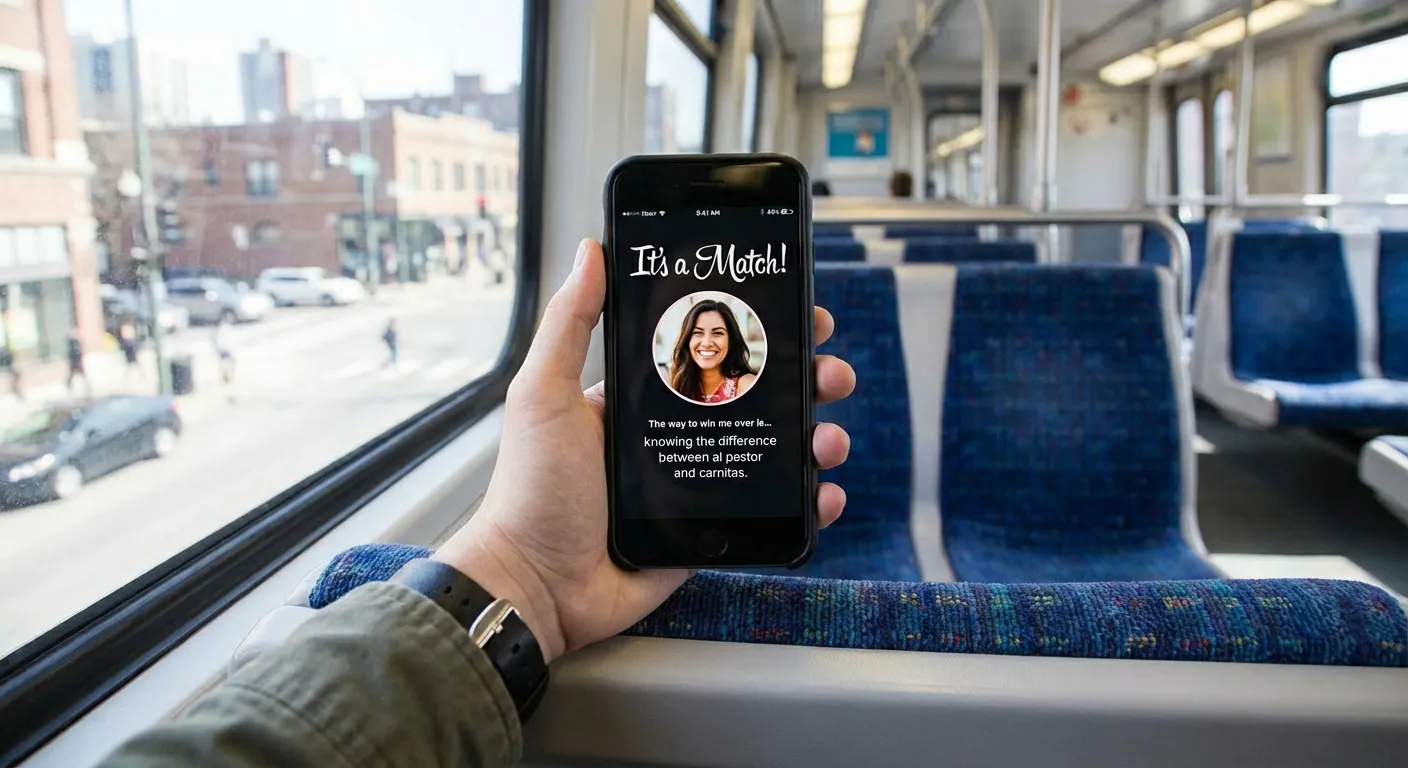
- Be specific in your answers. "The way to win me over is... with tacos" is forgettable. "The way to win me over is... knowing the difference between al pastor and carnitas" gives someone something to respond to
- Use at least one prompt to signal what you're looking for
Tinder Profile Tips
Tinder is faster-paced and more photo-driven than other apps. Bios are shorter and often skimmed quickly.
Best practices:
- Keep your bio brief—a few sentences max
- Lead with your best photo (Tinder's Smart Photos feature can help test this)
- Use all your photo slots to show range
- Something light or funny often works better than earnest and detailed
Bumble Profile Tips
On Bumble, women message first, which changes the dynamic. Your profile needs to make starting a conversation easy.
Best practices:
- Include obvious conversation hooks—things someone can easily comment on or ask about
- Your photos and bio should work together to give multiple entry points
- Since women are initiating, making yourself approachable and interesting matters more than seeming impressive
How to Get More Matches on Tinder (and Elsewhere)
If matching is the goal, the research points to a clear priority order:
Fix your photos first. This has by far the biggest impact. Get feedback from others. Test different images. Prioritize quality and variety.
Remove friction from your bio. Cut negativity, fix errors, add specific details that invite conversation.
Fill out your profile completely. Incomplete profiles signal low effort and perform worse across platforms.
Be active. Most app algorithms reward recent activity. Sporadic use means lower visibility.
Then worry about what you say. Openers matter, but they operate on top of everything else. (More on that here.)
The Uncomfortable Truth (and the Relief in It)
The research consistently shows that what you look like in your photos—not your inherent physical attractiveness, but how you present in those specific images—drives most dating app outcomes. That can feel discouraging.
But there's relief here too. Because "how you present in your photos" is something you can change. Different photos of the same person get wildly different results. Photo selection, quality, lighting, and context all matter—and they're all within your control.
You're also probably using worse photos than you could be. The "curse of self" research suggests most people are systematically choosing photos that don't serve them. Getting outside input can unlock options you'd never have considered.
Dating app success isn't about being objectively attractive by some fixed standard. It's about presenting yourself well in a medium where first impressions are made in fractions of a second. The research says that's a skill you can improve.
Once your profile is working and you're getting matches, the next challenge is starting conversations that actually go somewhere. We've written a research-backed guide to dating app openers that covers what the evidence says about icebreakers—and what it doesn't.
And when you're past the opening messages and into actual conversation? That's where things get interesting. Our relationship questions are designed to help you move beyond small talk and actually get to know someone—which, ultimately, is the whole point.
What was your school nickname?
Try All Relationship Questions